The Buy, Restoration, and Scrapping
2024-2026
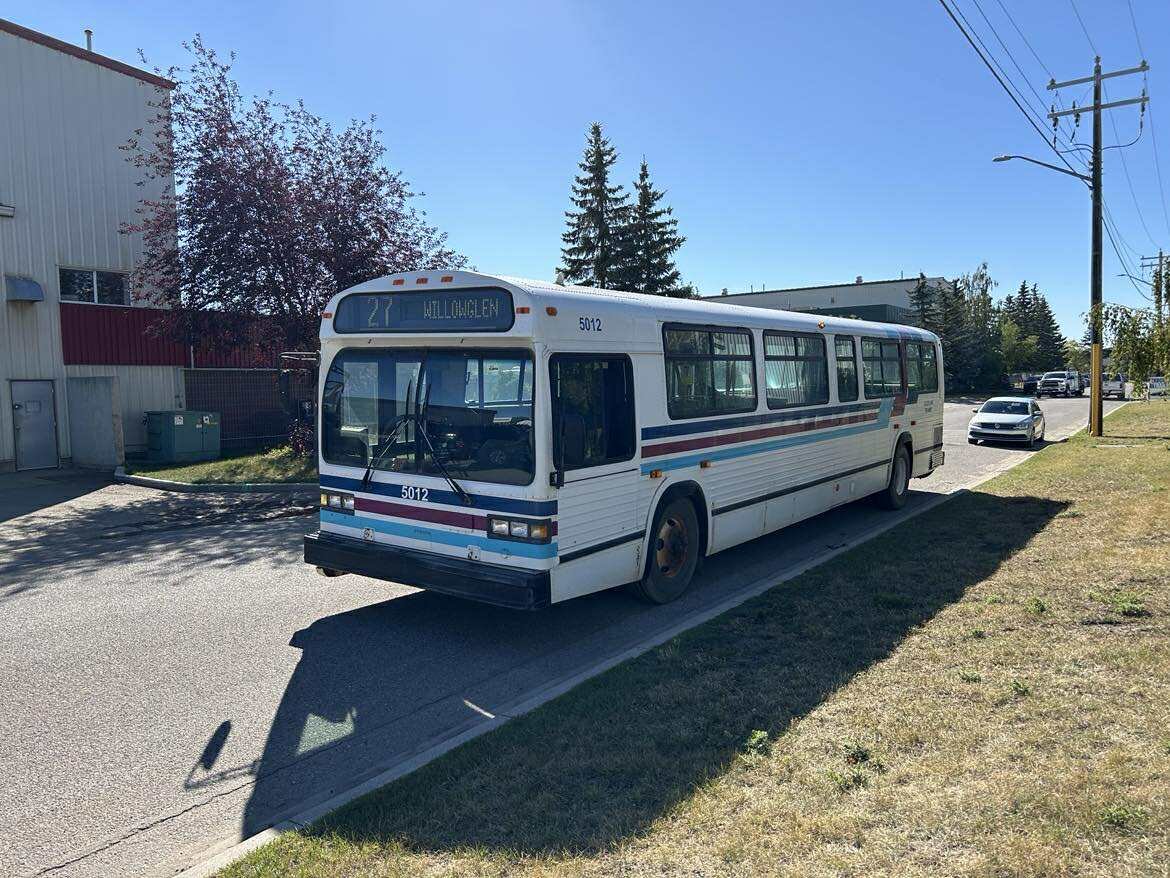
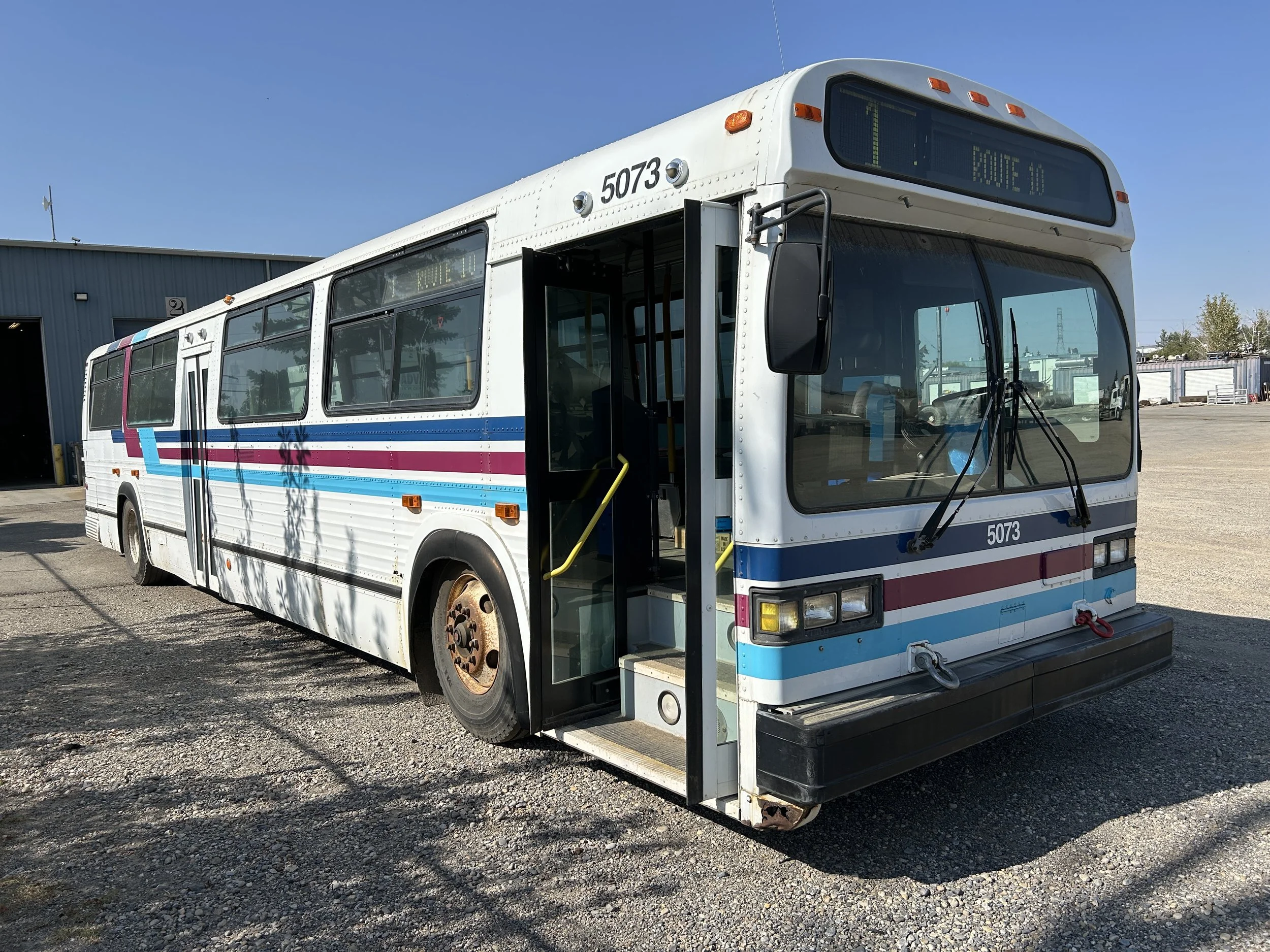
As noted on the “About Bus #5073” page, Cold Lake Transit auctioned off a few of their buses in August of 2024. These were their units #5007 and #5012, which were ex-Calgary Transit MCI Classics #5083 and #5073 respectively. I felt a sense of duty to purchase one and bring it back to Calgary for preservation. I grew up riding the Classics daily in service back in South Calgary and had always wanted to ensure one gets locally preserved to keep the fleet's legacy alive.
The first major decision was which of the two buses to purchase. Why bus #5073?
We initially had some confusion regarding which Cold Lake unit corresponded to which Calgary Transit unit due to misleading VIN and CPTDB Wiki information. We knew 5007 was ex-CT #5083, however we initially thought 5012 was ex-CT #5098, as both the Wiki and the auction listing stated 5012’s VIN ended in 75 (5073’s VIN ends in 50).
The auction listings initially did not provide photos of 5012 itself and used the same photos of 5007 for both listings. This combined with having seen past photos of ex-CT #5098 on Cold Lake Transit property, which seemed to be in poor condition and missing several parts, led me to decide initially to bid on 5007, ex-CT #5083. I was hesitant though as 5007 had been heavily used by Cold Lake and had a lot of exterior corrosion. I then tried to get in contact with Cold Lake Transit officials to get more information on 5012.
After a few attempts, I eventually got in contact with the fleet manager who advised me that 5012 had been maintained under the Alberta CVIP program and was used for ad hoc charter work by the city of Cold Lake. She then took photos of 5012 itself and uploaded them to the listing per my request. Later on, I also advised her of the discrepancy between CPTDB wiki info, photos, and the VINs on the auction listings that suggested 5012 was ex-Calgary Transit #5098. Following all this was a major clarification for us all. The Cold Lake fleet manager advised us that 5012’s VIN ended in 50, and not 75 as was shown in error. Cold Lake Transit #5012 was in fact ex-Calgary Transit #5073!
5073 was a bus that spent most of its time with Calgary Transit running out of Anderson Garage in South Calgary, doing mostly weekday peak hour work, and had been refurbished unlike 5083 or 5098. The photos Cold Lake uploaded of it to the auction listing also showed it to be in much better external condition than 5007(5083) or any of Cold Lake Transit’s other ex-Calgary Classics.
Considering all of this information, my opinion completely shifted on which bus is the better candidate, and I decided 5012 would be the bus I would bid on. On August 28th, 2024, the closing day of the auction, after a brief bidding war with another prospective buyer who would end up acquiring 5007, I officially became the owner of Cold Lake Transit #5012, ex-Calgary Transit #5073 for about $4600 including taxes and fees!
September 6th, 2024 - 5073 returns home!
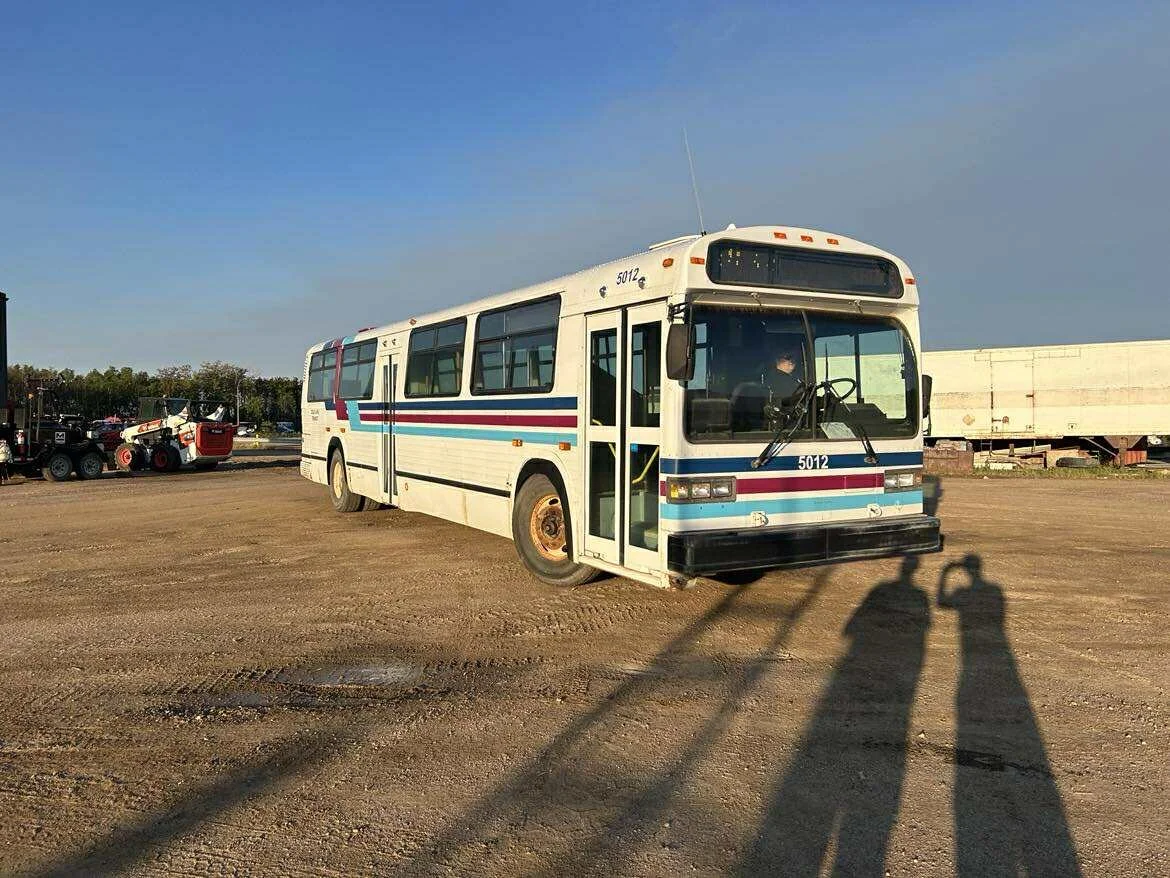
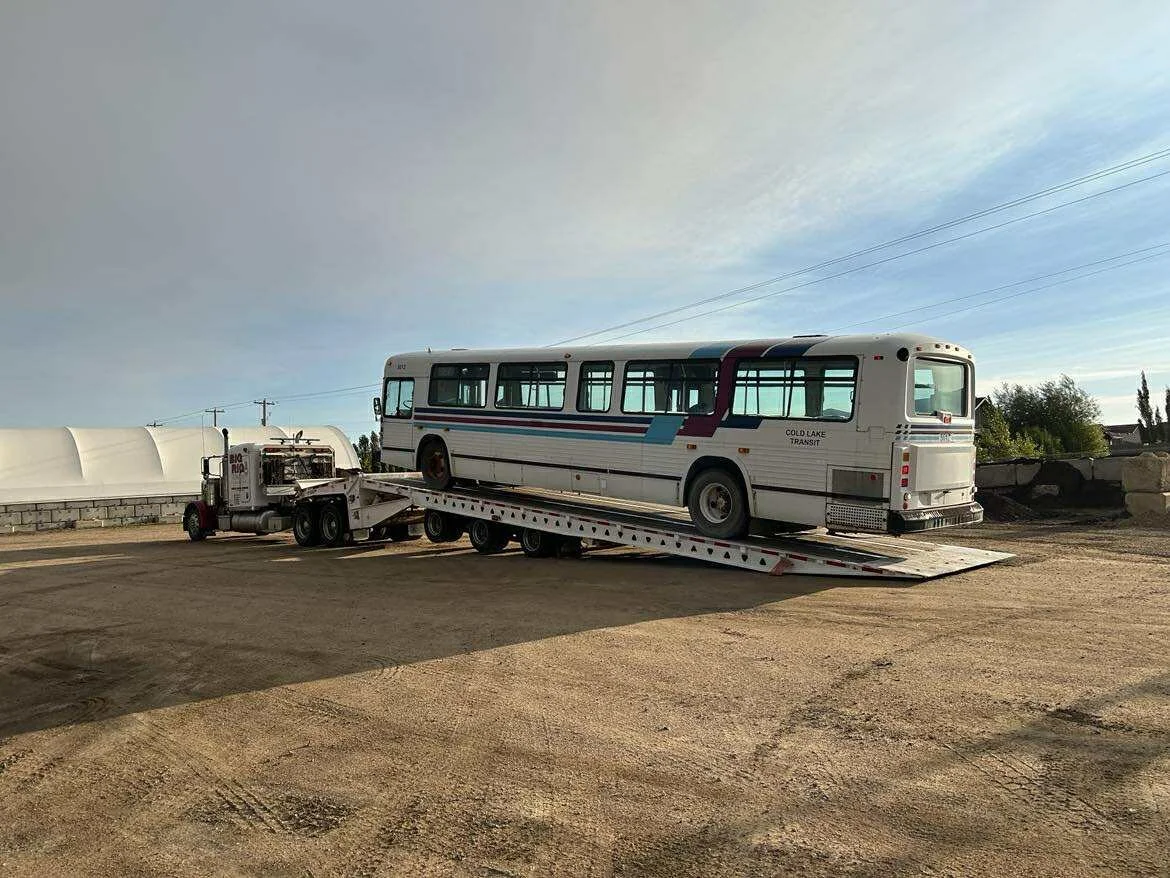
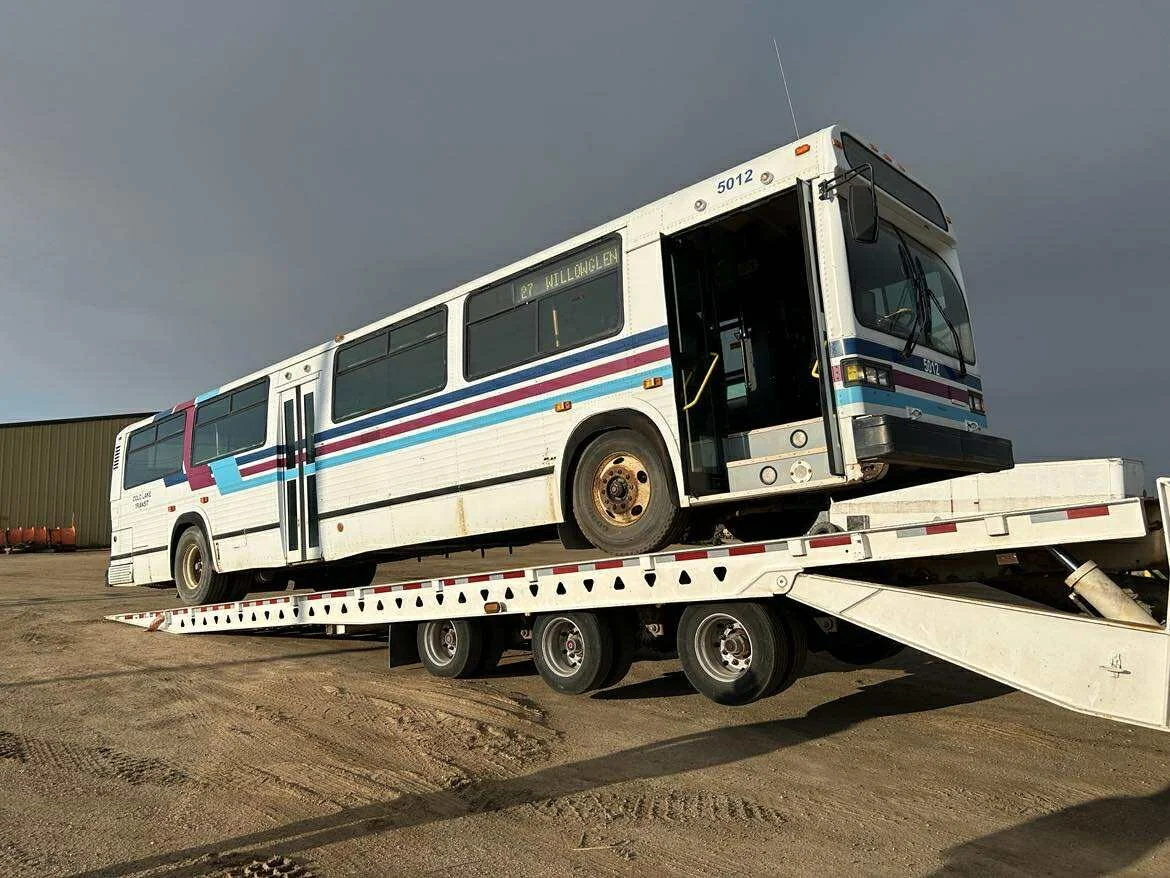
After a week of figuring out logistics such as transportation and storage, Randy and I drove up to Cold Lake on September 5th and stayed the night. We then headed out the next morning to see Cold Lake Transit #5012 for the first time, drove it for a lap around Cold Lake’s yard, and loaded it up onto the flatbed truck to be hauled to Calgary for preservation as Calgary Transit #5073. The bus looked fantastic and seemed to be in similar condition to 1130. We also confirmed it was indeed ex-5073 from the VIN plates and the footprints of the original Calgary Transit decals seen on the body.
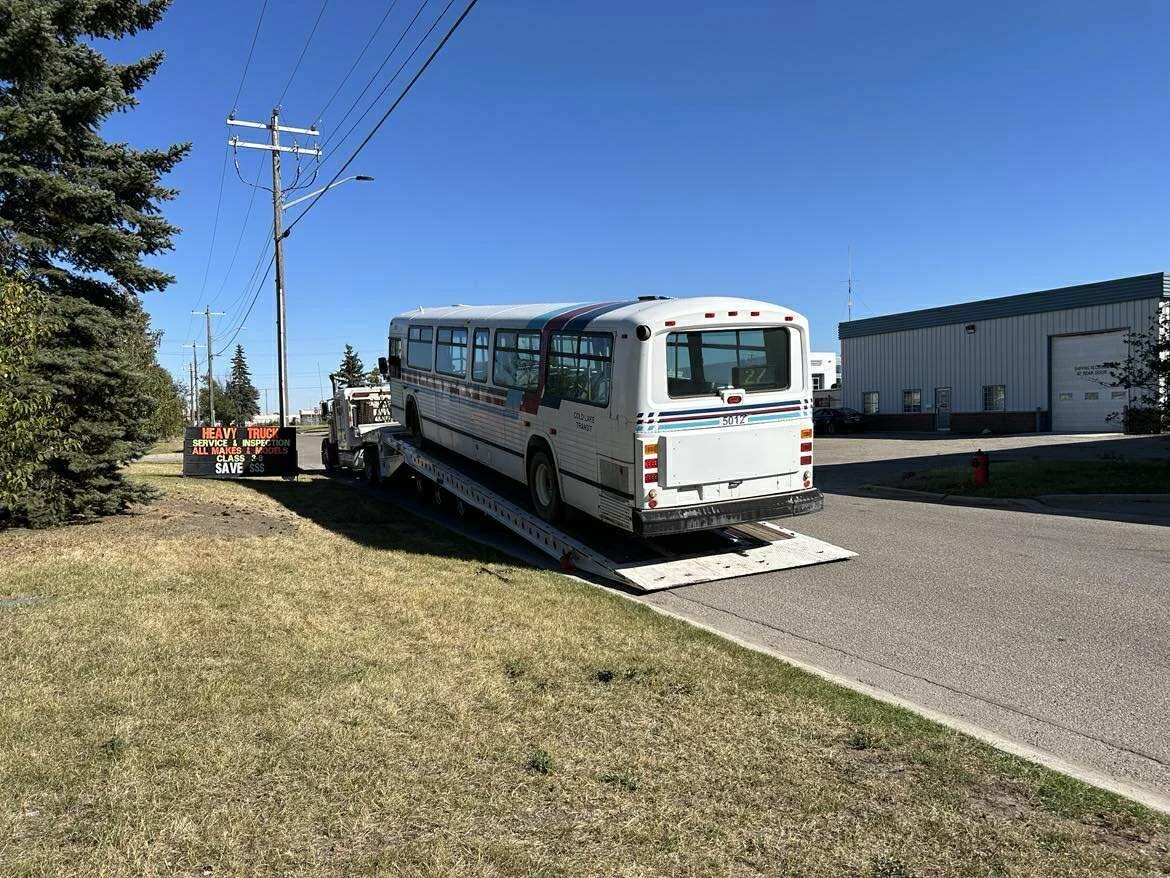
Luckily I was able to secure antique insurance for it right away and also reached out to a friend to make the fleet number decals. Several hours later, 5073 arrived back in its rightful hometown for the first time in over 8 years. I elected to have the bus dropped off at a mechanic’s shop first to have a CVIP-level inspection completed on it before it hits the road.
Enjoy the following photos of the bus in Cold Lake for the final time, getting loaded up, and later dropped off in Calgary.
In the weeks that followed, the staff at Advance Tank Centers (a shoutout goes to Matt and Phanose!) completed the inspection on the bus as I collected small essentials such as door locks, hazard triangles, a fire extinguisher, and of course the 5073 fleet number decals that would eventually be applied by the shop staff. A rough breakdown of the initial inspection findings are as follows:
Espar engine heater inoperative
Air and coolant leaks
A major fuel leak from the fuel tank - this would become by far the largest problem over the course of this project
Inoperative tail light
Worn air springs and rusted pedestals
Worn rear leveling valve
Worn brake relay valves
Horn inoperative
Slack adjuster clevis pins seized
Among other minor issues.
Fall 2024 - Summer 2025 - Rebuilding the fuel tank
The first issue I wanted worked on, as it would be the most safety critical, is the fuel tank. It turned out that it was rotting through at the straps, and this was a very common problem with the MCI Classic fuel tanks, as even Cold Lake Transit said they had this issue on multiple occasions and had no spares available to ship to Calgary. With no aftermarket solutions available either, our only option was to try and repair the existing tank.
This ended up being a very complex operation that would take nearly 9 months, with a “tank inside of a tank” setup being the end result. The damaged tank was given a “wrap” or casing that captured the existing tank and any leaks from it. This still resulted in an approved fuel tank that was perfectly safe, however the new tank weighed significantly more and had a larger diameter. The unintended consequence of this was that several changes had to be made to the bus’ underbody and frame.
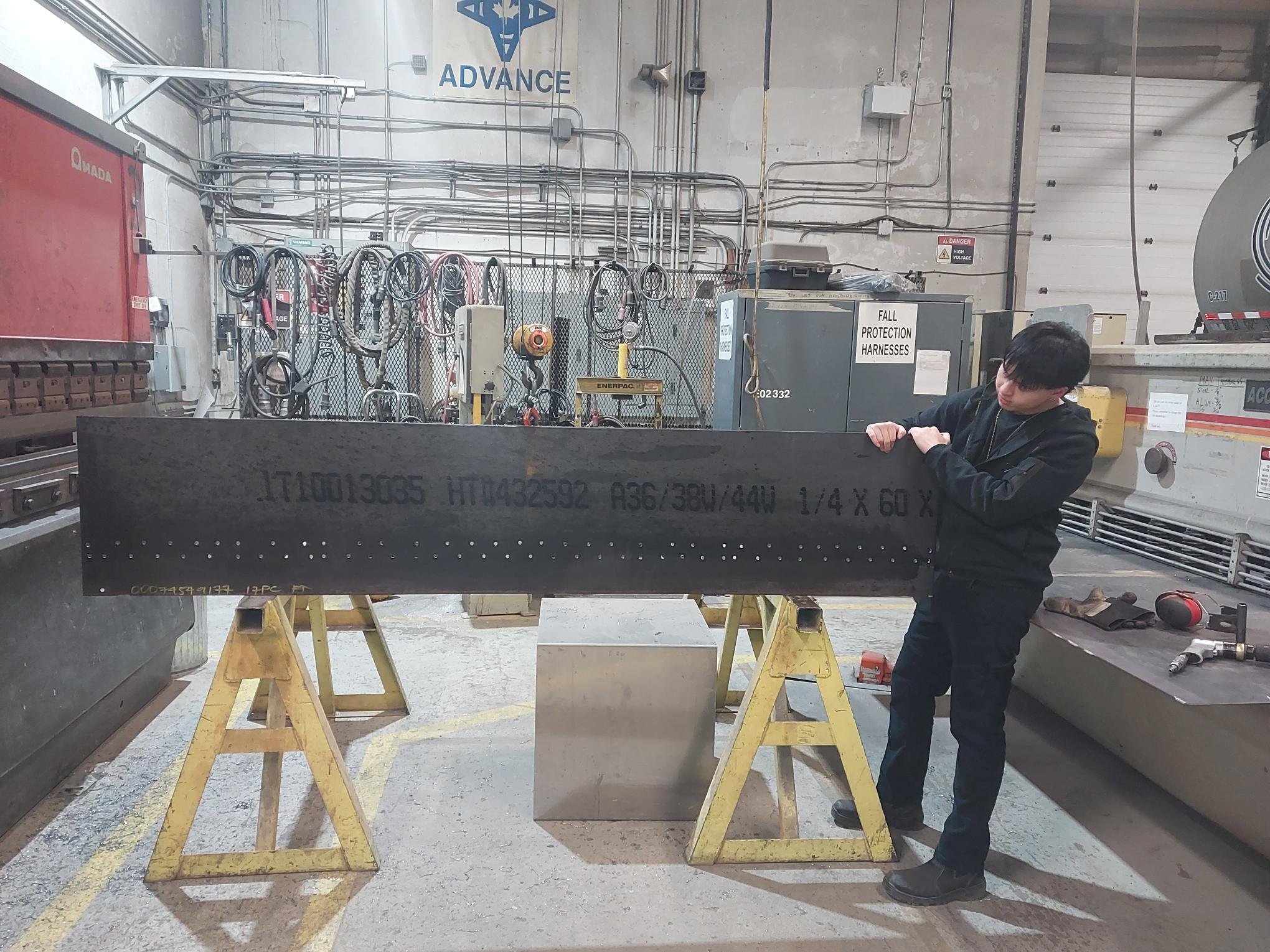
The new, heavier fuel tank required a new mount and subframe setup which was much larger and required rearranging of several underbody components including the main battery cable completely replaced with a new one. To support the additional weight, new reinforcing crossmembers needed to be fabricated to mount the tank to the existing crossmembers under the bus. These are shown in the below photos courtesy of Advance Tank Centers. Photos of the bus inside the shop and of its modified fuel tank have also been included. I hugely owe it to the amazing shop staff for their resourcefulness in coming up with all of these solutions.
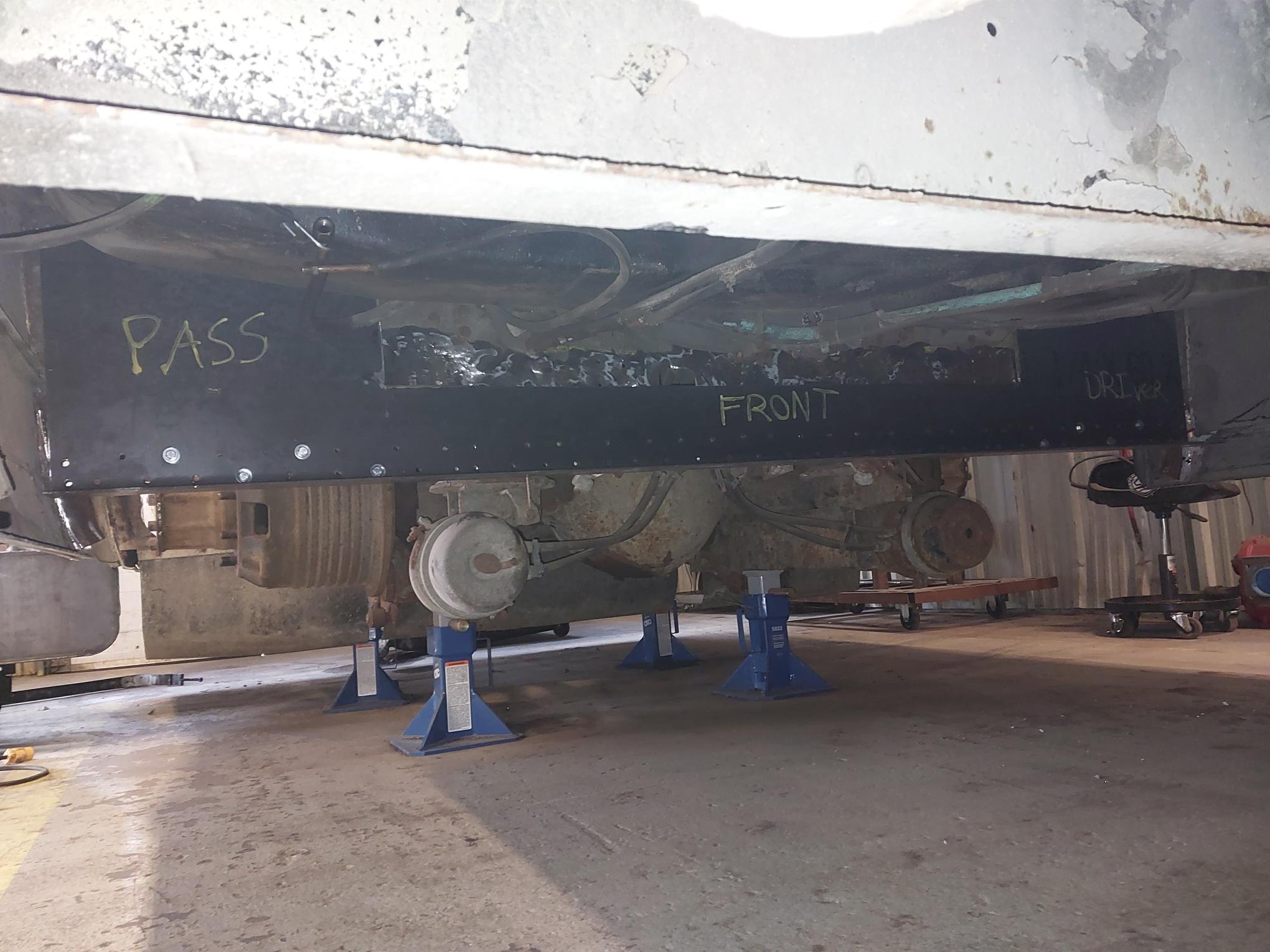
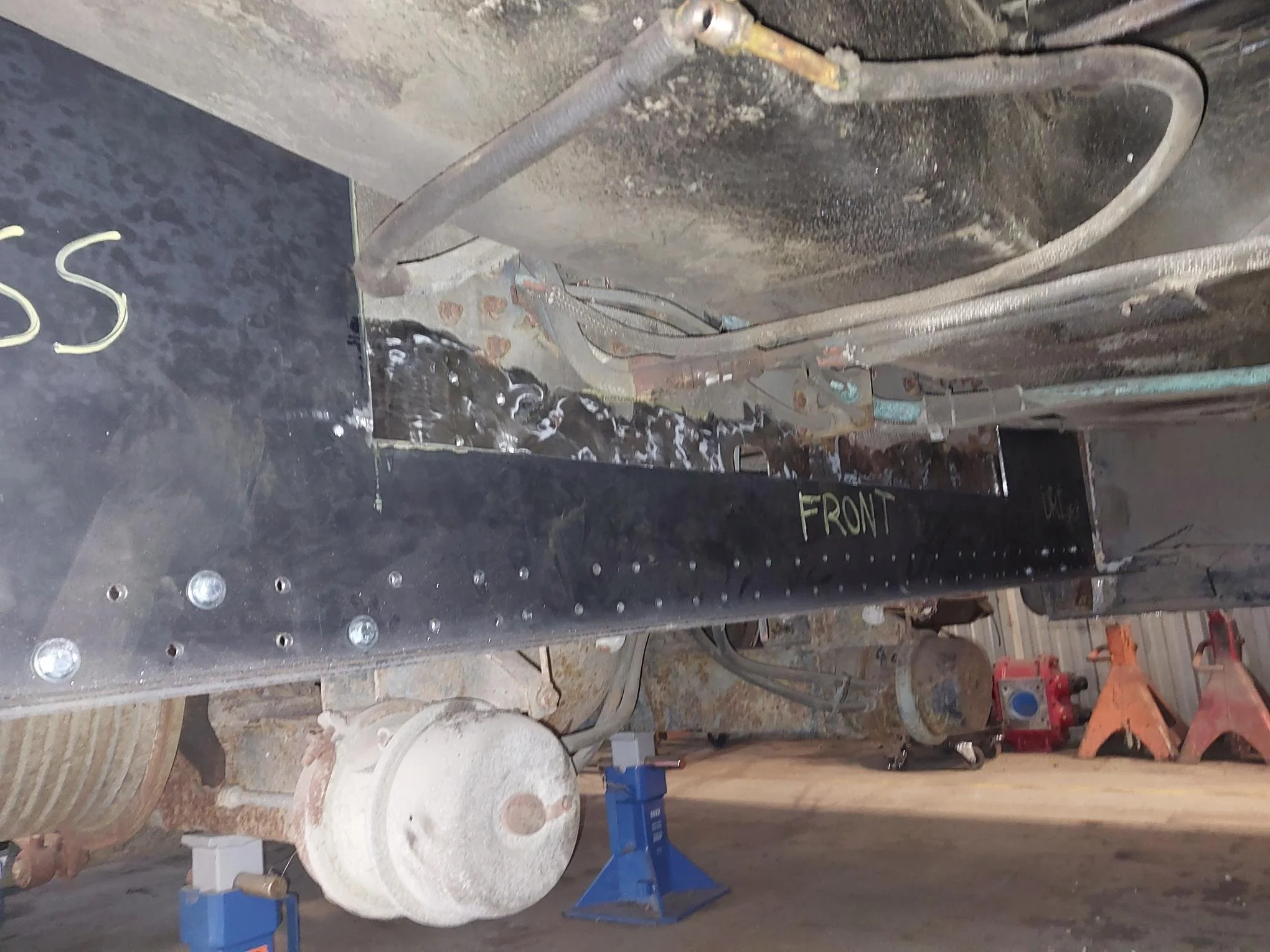
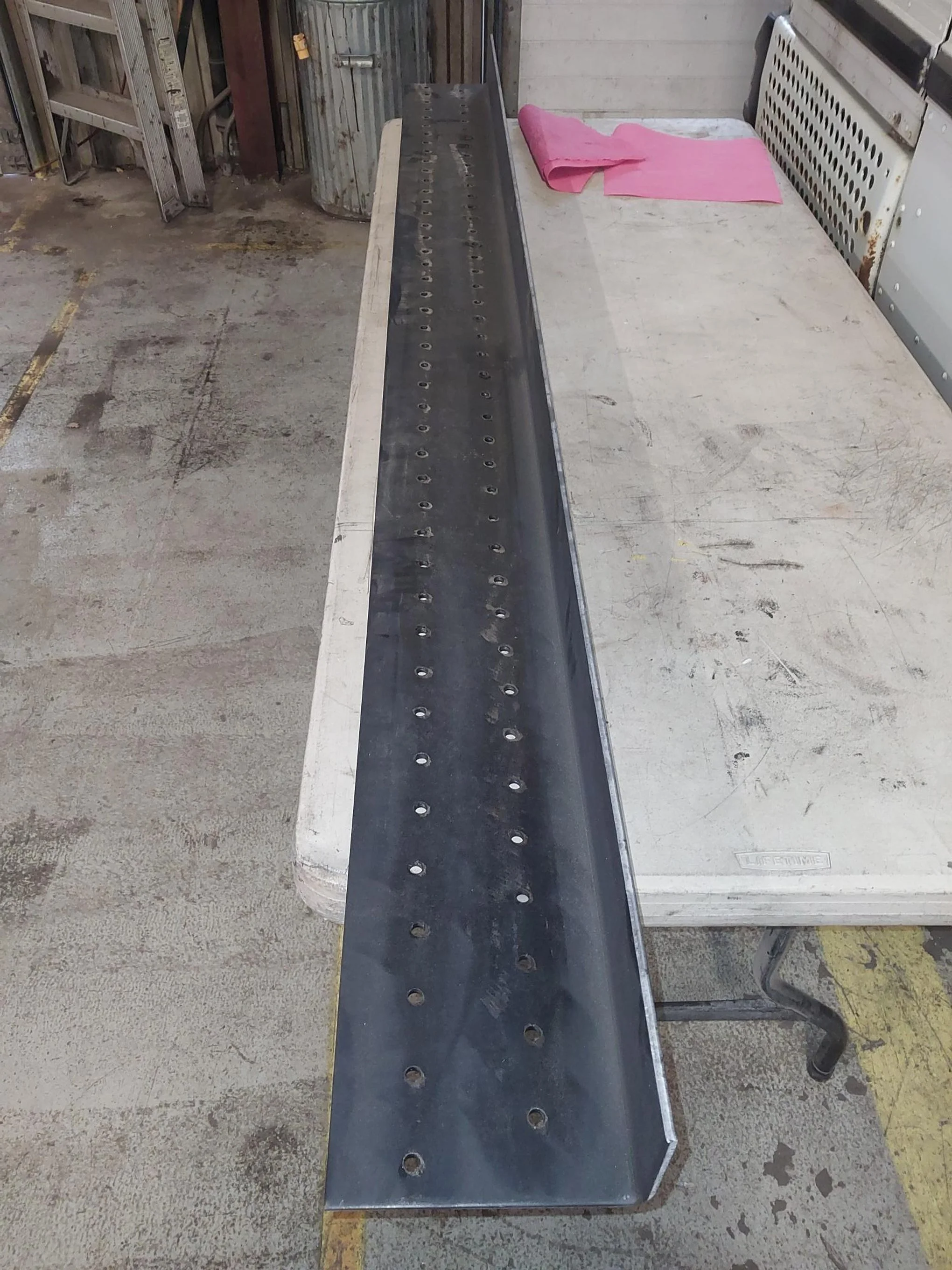
The new reinforcing crossmembers to mount 5073’s new fuel tank to the frame
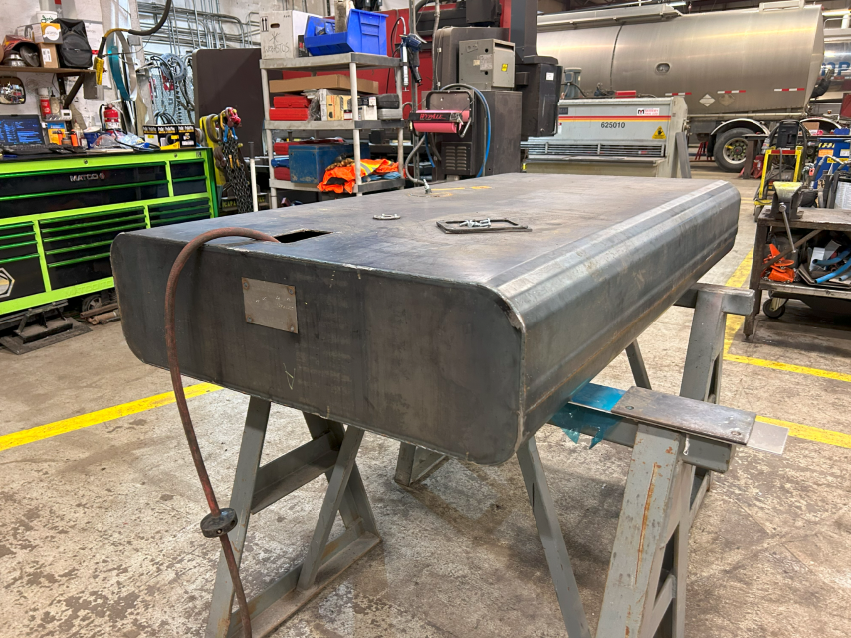
5073’s new fuel tank
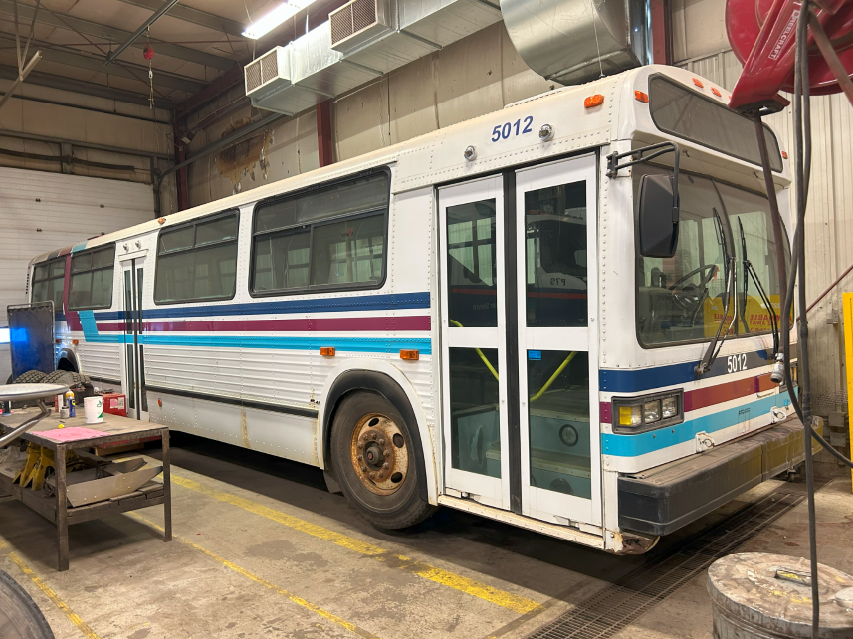
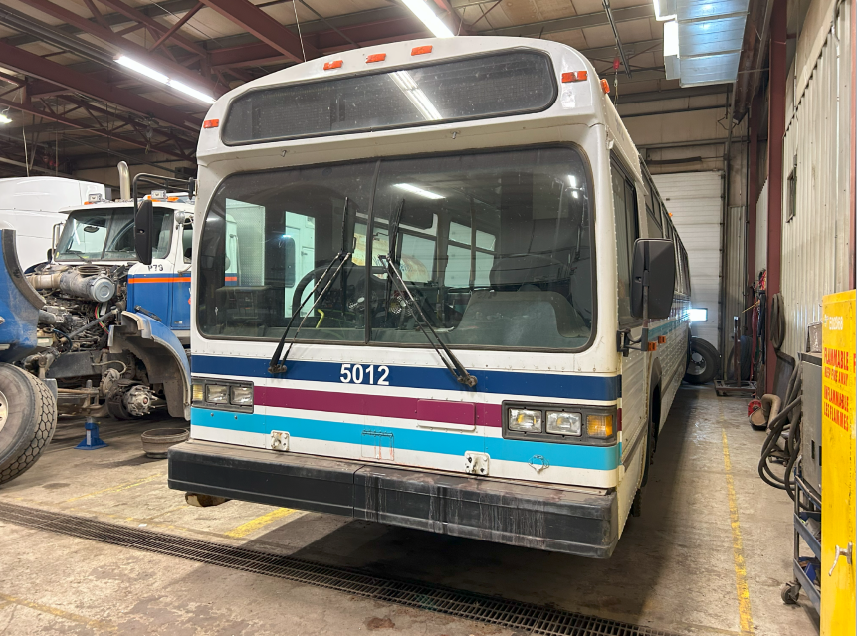
5073, still with its Cold Lake decals and fleet numbers, inside the shop
Needless to say, this was all a massive strain on the budget and timeline for this project, but it was very necessary work. By the time the fuel tank sub-project was finally complete in July of 2025, it alone had accrued over 100 hours of labor and many more in parts expenses. The bus also developed a fuel delivery/engine power issue after the fuel tank was reinstalled which will delay things further as I will need to work with the shop staff to diagnose and fix this before the bus can be brought on the road. A change of staffing at the shop during this time added yet further complexity throughout this process.
Ultimately, due to the shop bill already having gone well over budget as well as the staffing change, I will be forced to leave unchanged the rear air springs, leveling valve, and brake relay valves for now. Fortunately most of the remaining and more critical items still ended up getting completed, including the inoperative tail light which I found a replacement for off eBay and installed in the bus on my own.
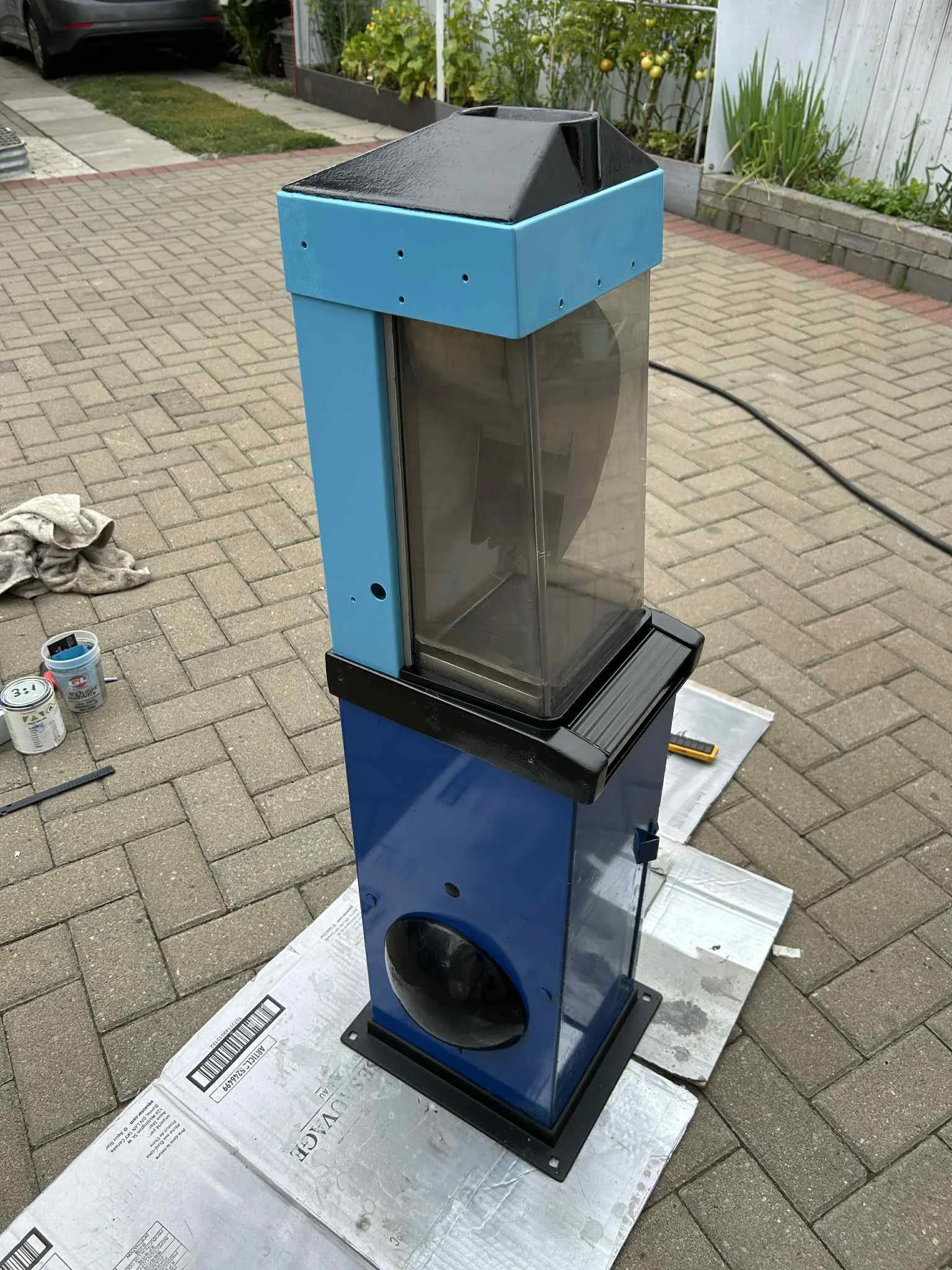
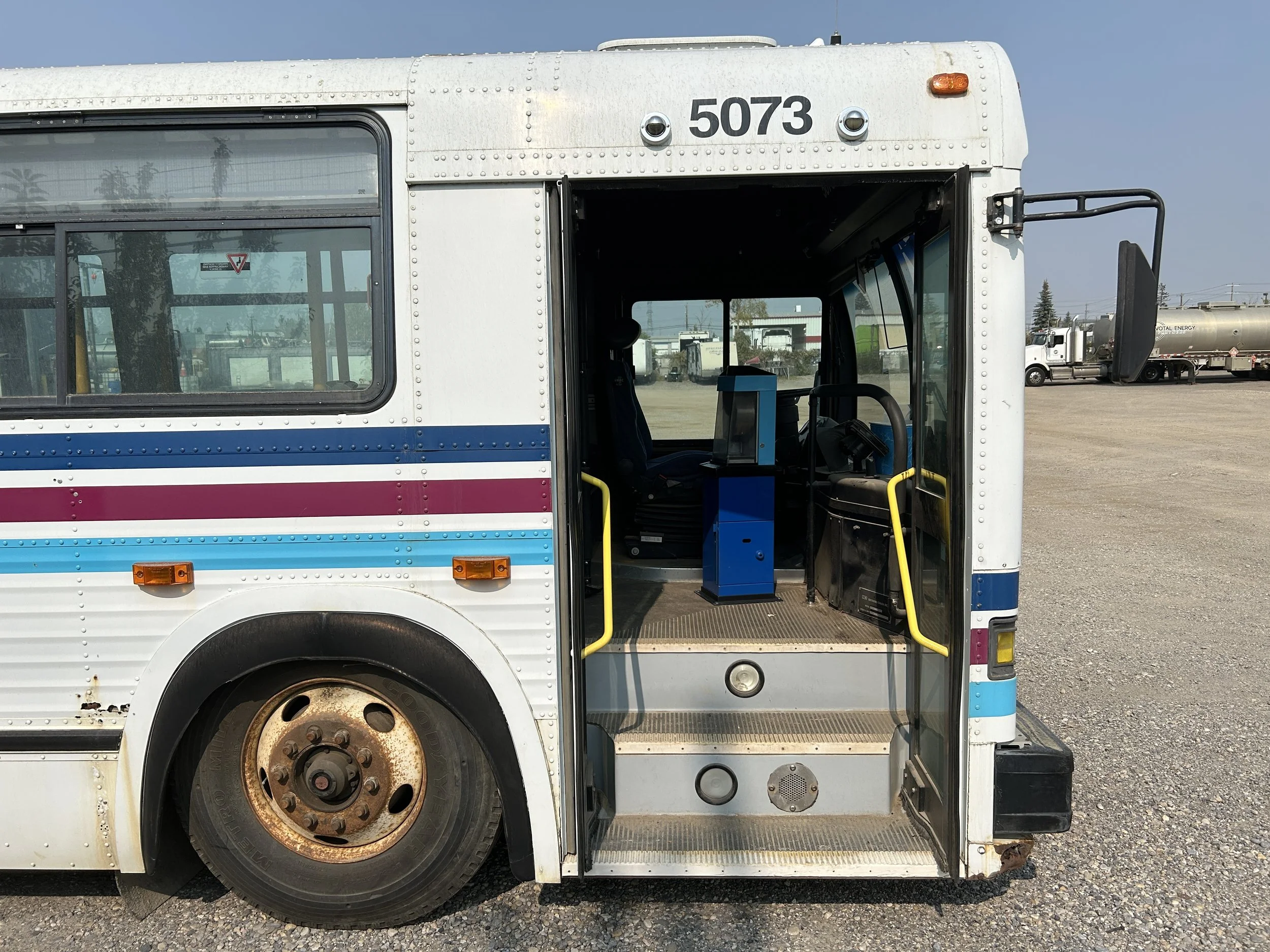
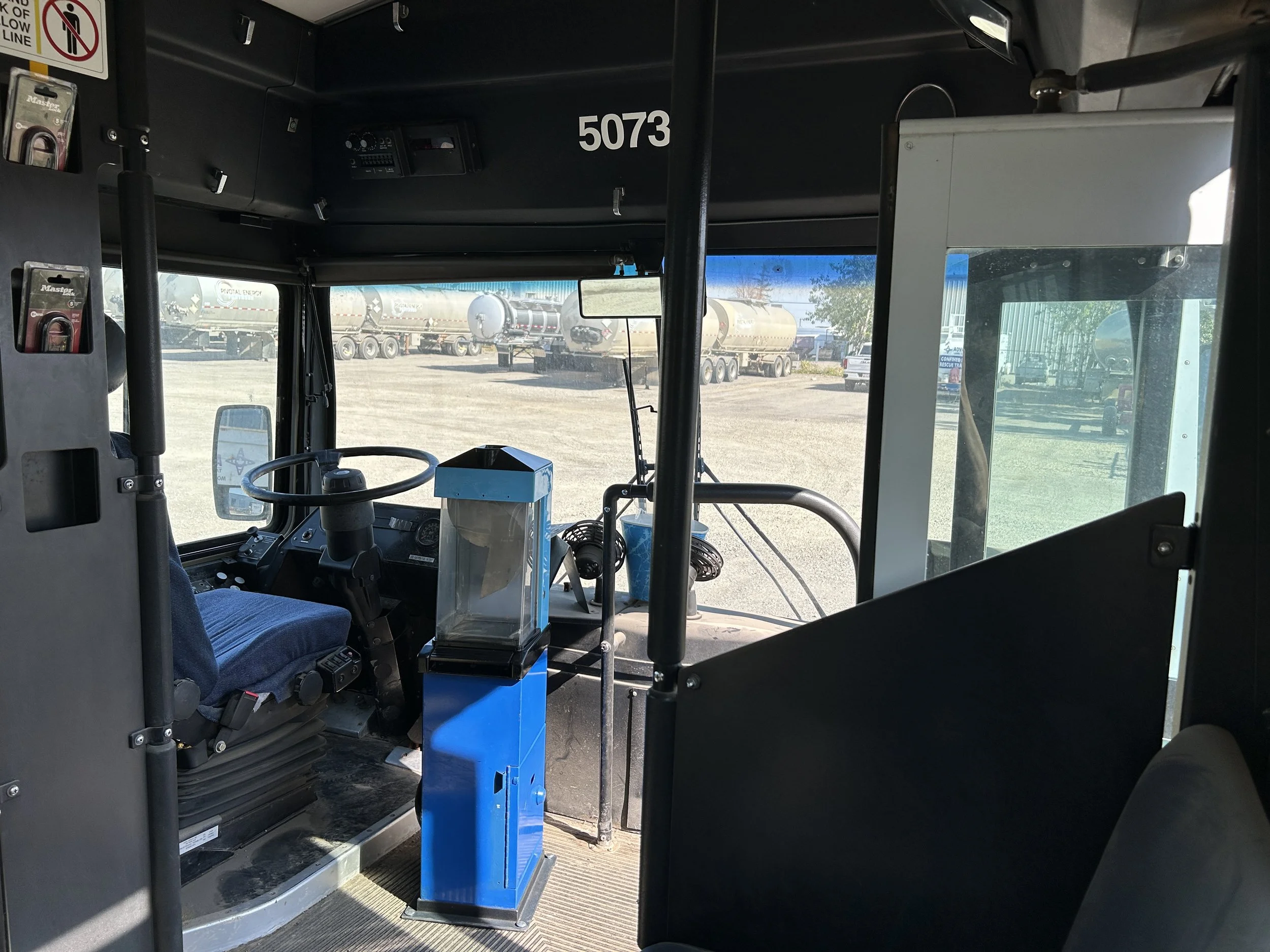
On another positive note, in late summer of 2025 I was able to get my hands on an original height Duncan farebox through a few contacts in the transit fan community which would go straight into 5073. This farebox, which had spent the last few years installed in Ken Baker’s preserved ex-CT D40LF #7632, was painted entirely in the same shade of dark blue that was used for the bottom portion of the fareboxes at Calgary Transit, so all I had to do was paint the top portion into the lighter shade of blue using the same process I did for 1130’s farebox in 2023.
Fall 2025 - More fuel system issues
The autumn months of 2025 consisted mostly of trying to resolve the aforementioned fuel delivery issue which rendered the bus unroadworthy. Coordinating with Advance Tank Centers staff, I had the fuel filters and fuel pump replaced, as well as a DDEC system diagnostic scan done by a mobile tech, none of which solved the issue. Eventually we made an agreement to have the bus towed to a different shop to have this properly diagnosed by a team of certified heavy mechanics.
This would become yet another long and costly process that would span until the end of 2025, but at long last, the amazing staff at Foothills Group eventually narrowed it down to the fuel collection standpipe inside the rebuilt fuel tank. The existing diesel in the tank seemed to be contaminated with an unknown substance, likely related to the process of painting the tank, which resulted in grime buildup at the bottom of the tank and within the standpipe.
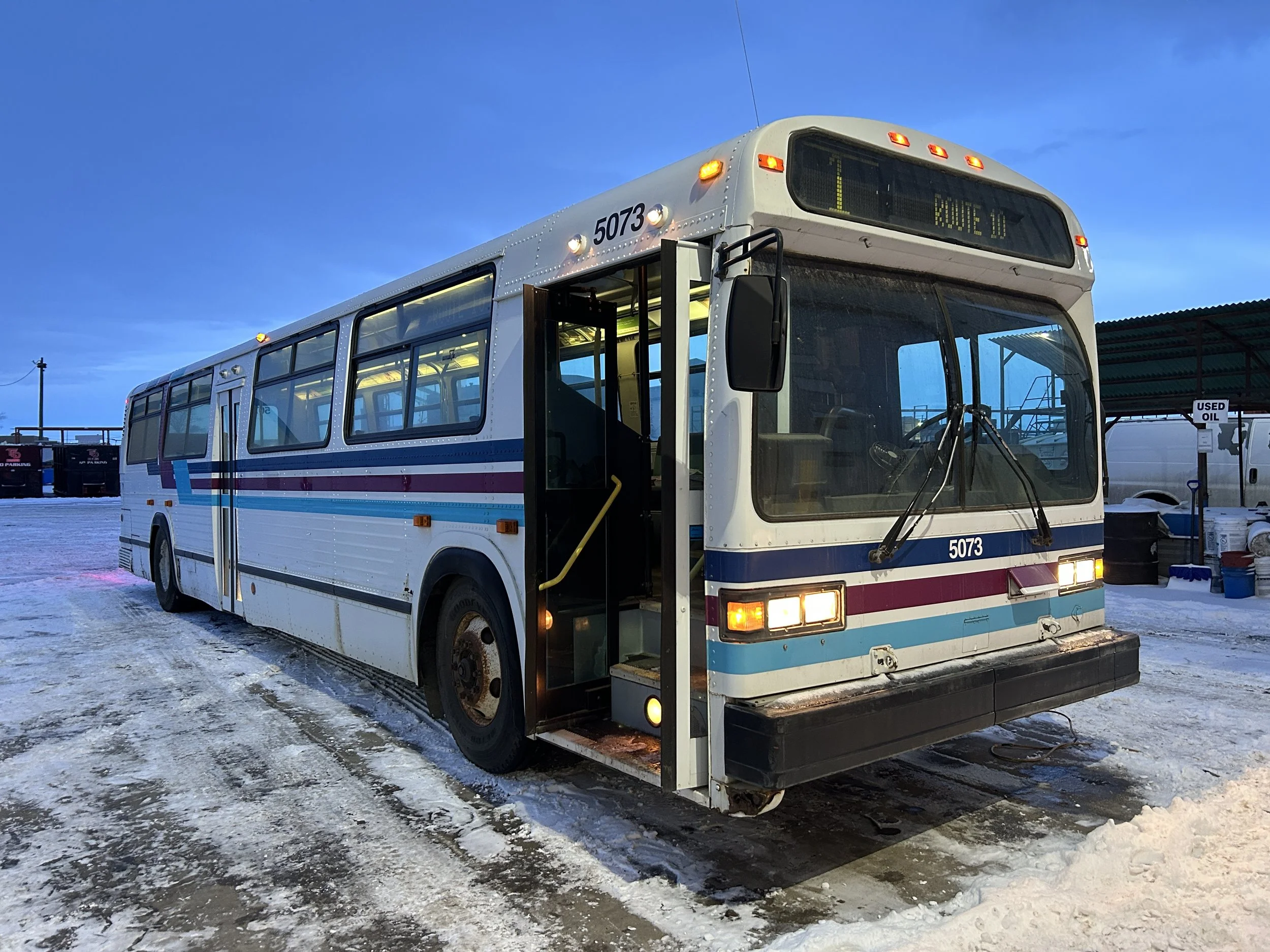
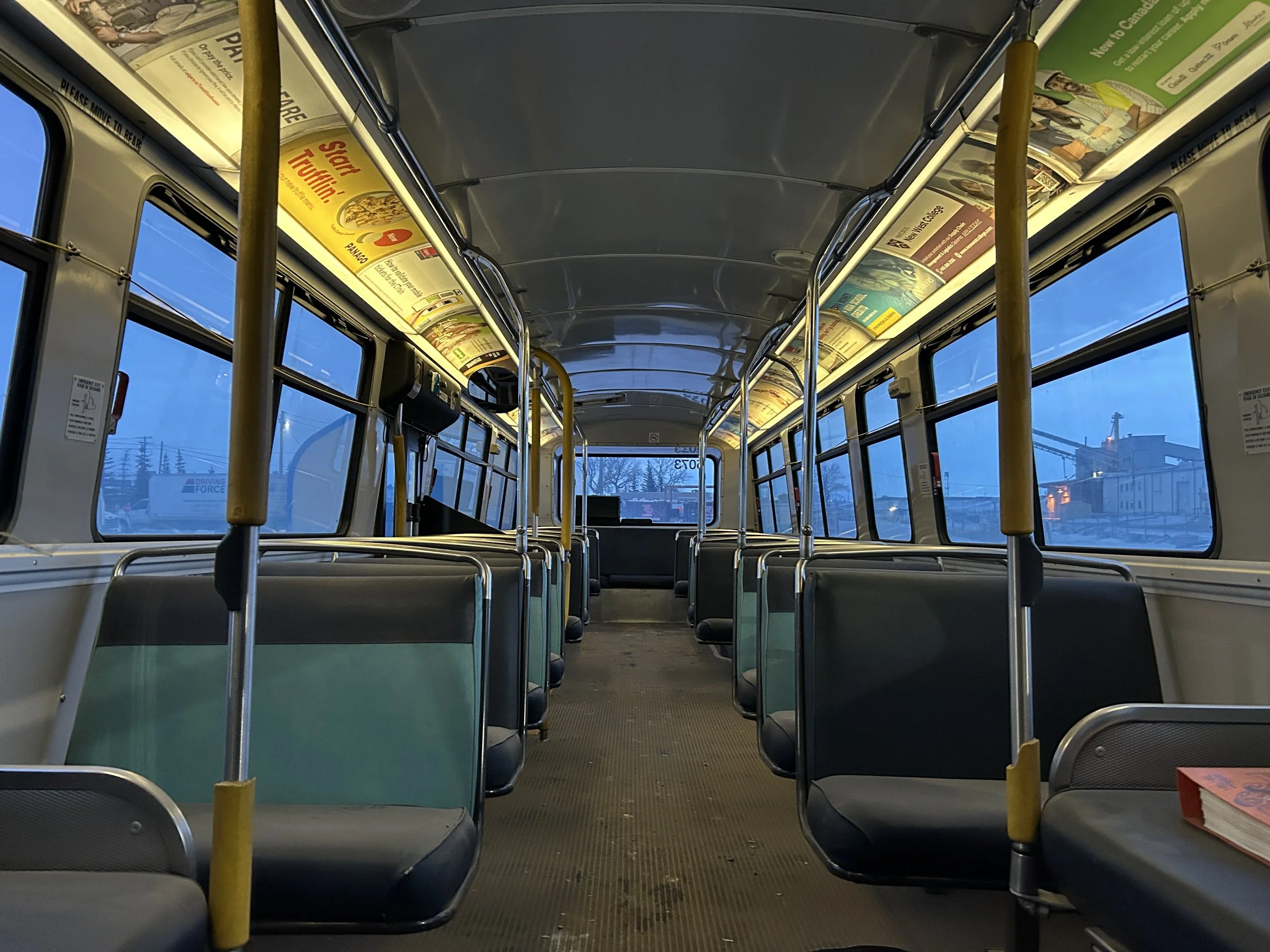
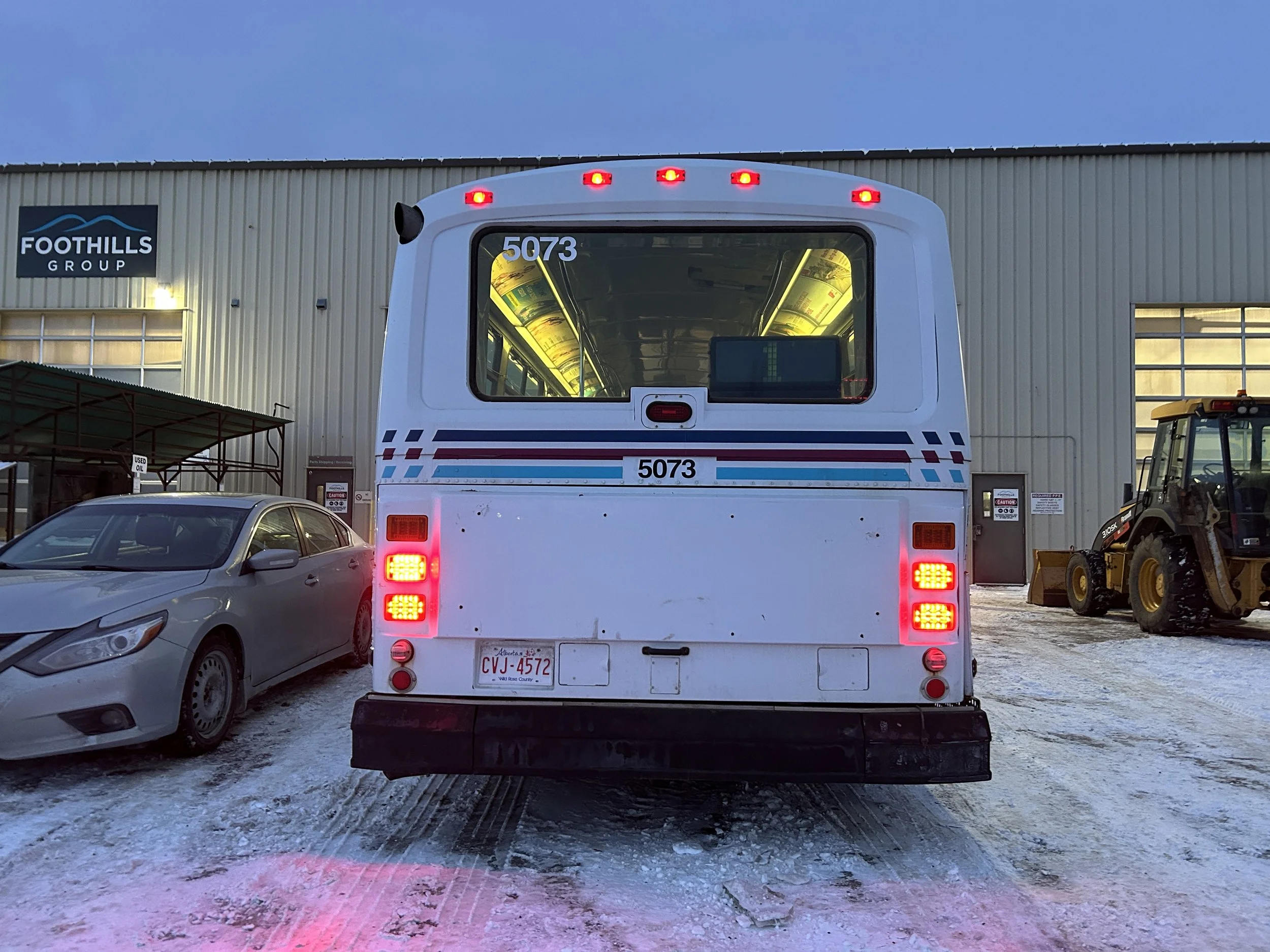
After this was rectified, in conjunction with the weather becoming briefly warm enough to work on the bus in December, I elected to also replace the two very deteriorated 8D batteries that the bus came with from Cold Lake as crank power had been another recurring nuisance throughout the project. For only about $500 total, I traded in 5073’s batteries for two new-blemished 8D-1400s at All Auto Battery in Calgary, the same place that I also sourced 1130’s batteries from in 2020. These powerful new batteries worked beautifully at cranking 5073’s engine with authority even in the cold (-1C) weather. As it was getting dark, I had a good chance to also test all the lights inside and outside the bus, complemented with a full set of interior ads that I pulled off of several retired Calgary Transit buses at a scrapyard that day.
December 31st, 2025 - Nick finally drives 5073 (almost)
Despite everything that we have done so far, the engine still ran rough after a period of time before stalling, albeit cranking and starting flawlessly initially. At first we suspected this might simply be due to sticking components within the engine (fuel injectors or pressure regulator) from lack of use, and so I wanted to see if “running it in” would help. So, on warm New Years Eve in 2025 I got behind the wheel of 5073 to drive the bus for my first time since picking it up from Cold Lake almost 16 months ago. With a shop tech riding along with me, I got as far as airing the bus up, backing it out of its spot and driving it about 100 meters down the shop’s access road before engine power tapered and the bus stalled.
For the next hour or so, myself and the shop staff diagnosed further using a mobile service truck from the shop. The problem lay somewhere between the cooling plate (fuel-cooled heat sink) on the DDEC module and the engine itself. The fuel pump had no issues supplying the needed fuel pressure, but the fuel pressure past the pump, through the cooling plate, secondary fuel filter, and finally to the injectors, was tapering off by the time it reached the injectors to the point where the engine could not run reliably.
As the engine ran beautifully with pressurized fuel forced directly into the secondary fuel filter from a bucket using an electric pump, the shop techs carefully reversed the bus back up the access road to the shop with one of them holding onto the bucket of fuel continuously pumping pressurized diesel into the engine. The problem will be diagnosed further in the coming weeks by means of taking apart suspect components to inspect further.
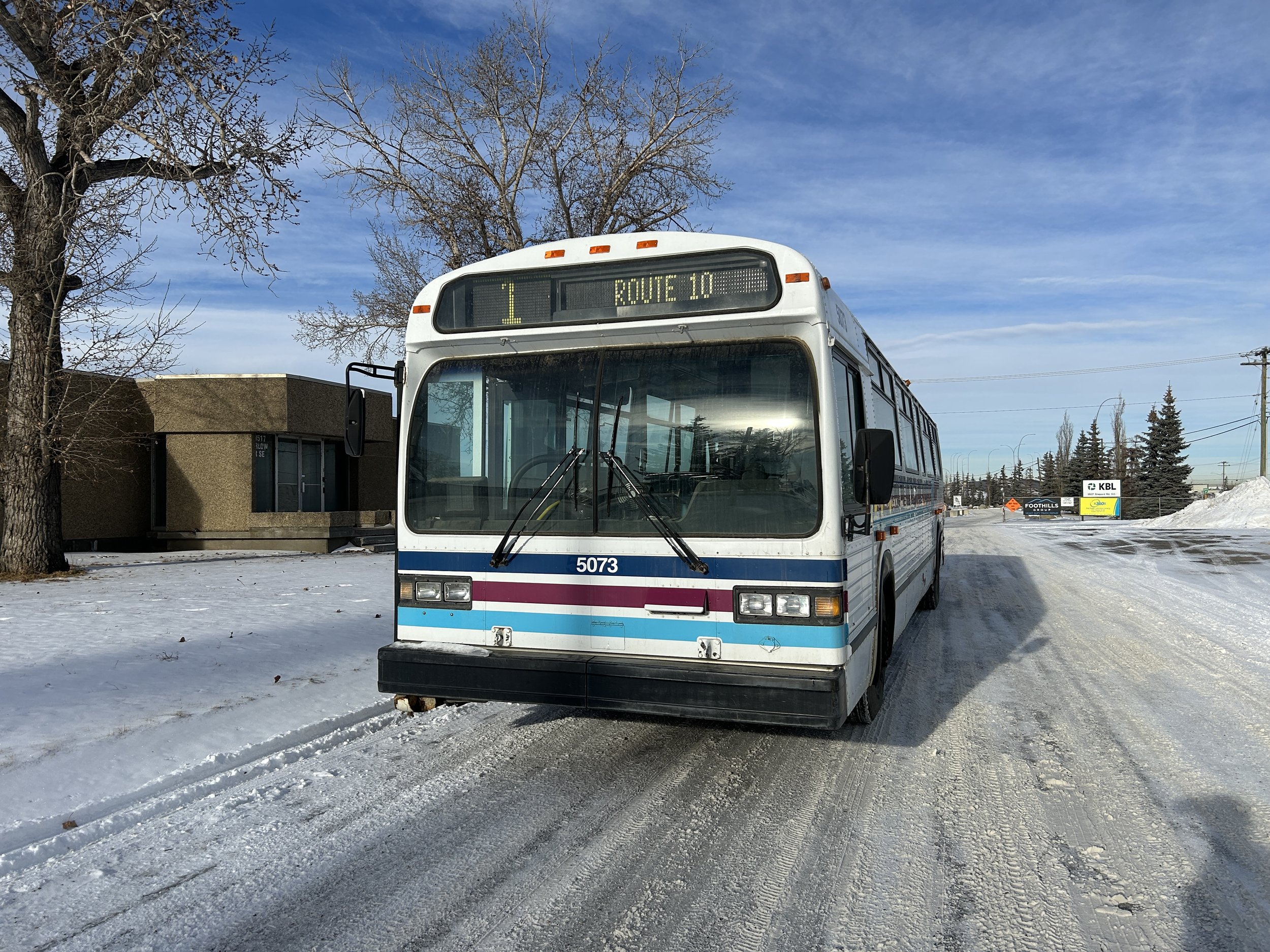
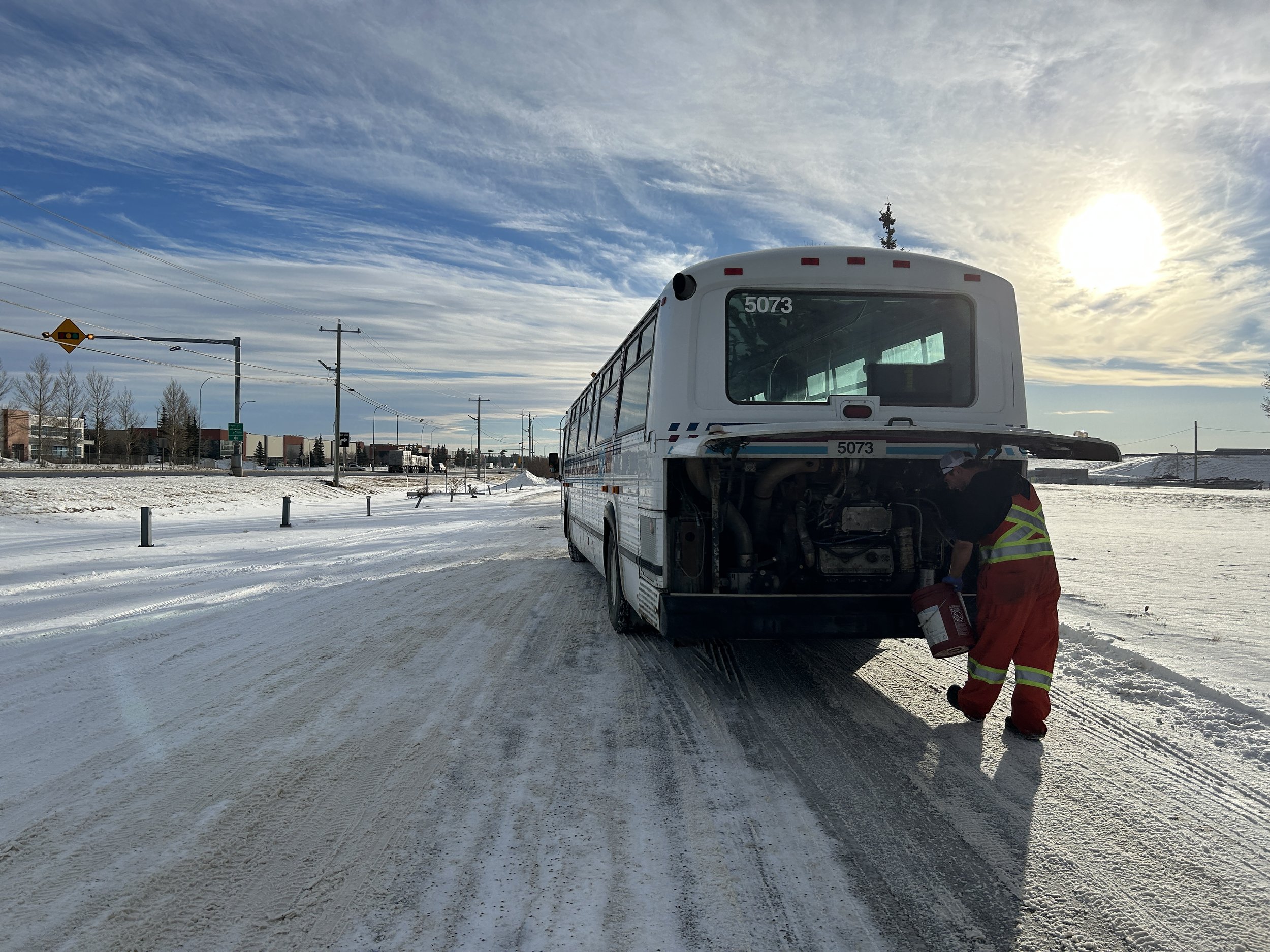
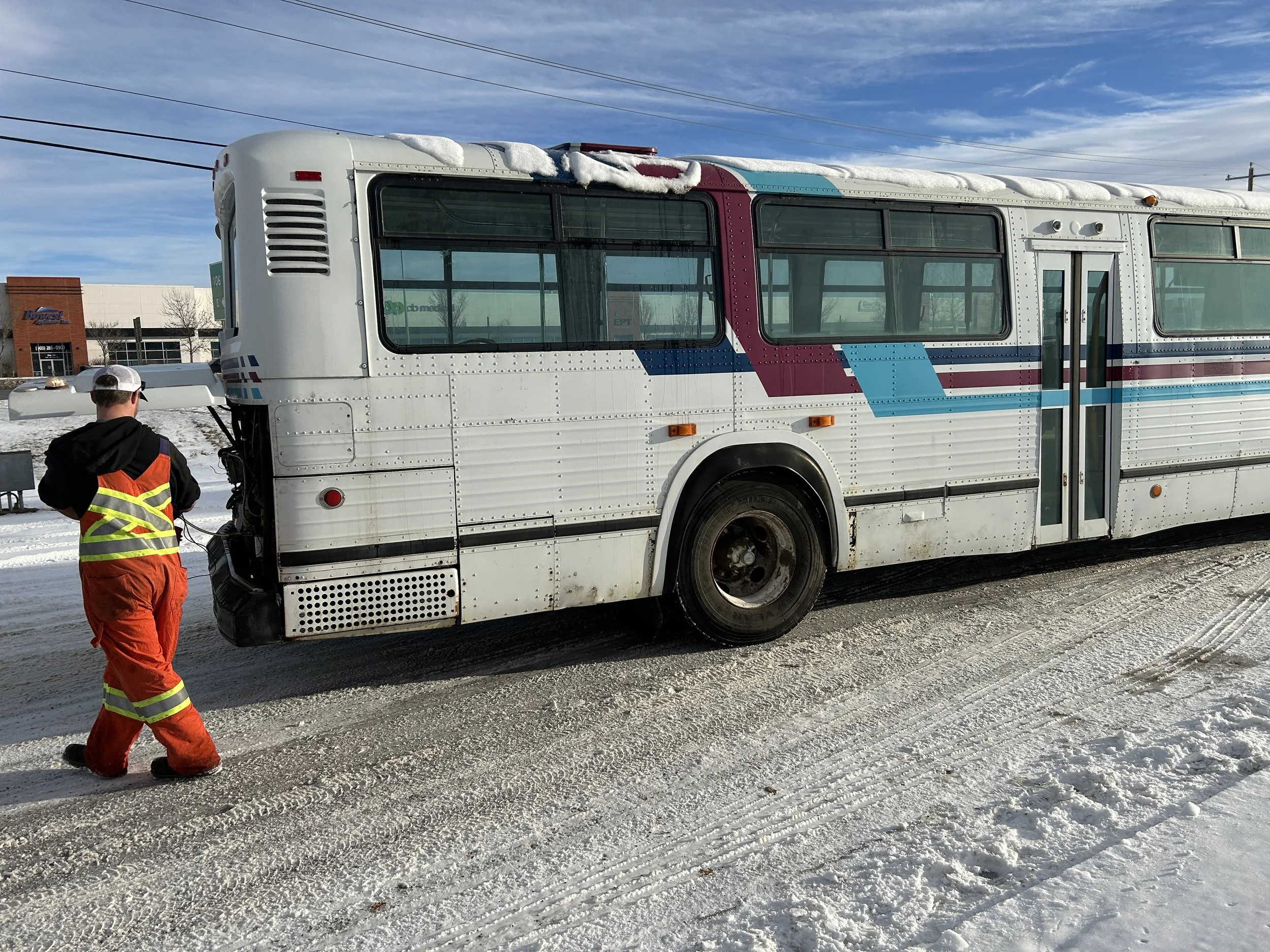
5073 stalled outside the shop, and techs maneuvering the bus using a fuel bucket to feed the engine
January 2026 - Broken window
I was advised that a windstorm had caused one of the bus’s side passenger windows (hinged emergency exits) to swing open violently, damaging the hinges and frame. Fortunately the glass itself wasn’t damaged aside a pre-existing small crack, however this will frustratingly cause yet another expense and delay to this project as the shop staff attempt to repair this in between the ongoing fuel system diagnosis.
March-April 2026
Finally, in March, after another staffing change at the shop, I was advised that the work in the bus was to resume. The fuel system diagnosis and work on the above mentioned window were still remaining to be completed.
The shop staff thoroughly cleaned the fuel system, replaced filters and lines, and drained the entire tank, eventually discovering that despite the encasement that was completed on the rusting/rotting tank the previous year (2025), debris caused by the original tank’s deterioration was still contaminating the fuel system and preventing the engine from running properly. Shop staff recommended a complete replacement of the tank with a new one. An option that I and the staff at the previous shop had already explored, in the beginning of this project back in late 2024, with no economical solutions found at the time.
I requested the tank removed from the bus for measurements to be taken and another attempt at researching a new tank to be done by the staff. To little of my surprise, after extensive exploration of tank manufacturing options by both myself and the shop staff, the only possible solution was to ship the tank to manufacturers in the US and have it completely dismantled and rebuilt from scratch.
At this point in the project, I have already invested over $50,000 into purchasing the bus, transporting it to Calgary, insuring/registering it, and of course paying staff at both shops to work on the unit for the past nearly 20 months. This was more than double what I had originally budgeted in the beginning. It was clear to me that getting the fuel tank remanufactured, a potentially very costly process with an uncertain outcome as it is, would not be possible for me to do. Furthermore, it was becoming increasingly my view that the unit’s overall condition and long term value likely does not justify the money already spent on it, let alone adding that expense to it.
While I am glad that I have given this project as many chances as I did, and enjoyed every step of the way thus far, from the initial purchase/transport back in September of 2024, to painting and preparing the Duncan farebox, ads and decals, to the various other minor hands-on tasks I had done to bus #5073 over time, unfortunately, I will now need to make the difficult decision to pass this project on. I asked the shop staff to reinstall the tank and soon began work to post the unit for sale. Initially my offering was to the transit fan community as a $1 project transfer. My hope was that another bus fan or transit history organization would be able to pick things up where they left off and give bus #5073 a last chance to live on the way I had originally intended.
September 2026 - Bus #5073 is off to Scrap
Per above, in April of 2026 I made the decision to halt the attempted restoration project of bus #5073. I then began thoroughly exploring many (I don’t use that word lightly) different options for potential project transfer or sale. I posted the bus for sale locally to the general public, and also reached out to numerous transit history organizations and individual enthusiasts across quite literally the entire continent, however the bus saw understandably little to no interest in over five months. The fact that it did not run and had a damaged window played a role.
By late summer, the reality was clear that there was no future for ex-Calgary Transit #5073 as a preserved unit. I made the decision to part the unit out of any items of value and prepare it for scrapping.
A fellow Calgary enthusiast ended up acquiring some of the bus’ Vultron sign hardware. Other items I saved for myself, including the batteries I purchased, along with several good condition Fishbowl-compatible seat cushions to save as spares for bus #1130. Finally, on September 28th, 2026, I arranged with a heavy tow company to haul the bus away to a local scrapyard.
This was by no means an easy decision, and certainly not ever an ideal outcome. No bus fan wants to see a historic bus end up in a scrapyard. That being said, this hobby is one that requires discipline no less than it requires tenacity. A part of that involves recognizing when a project’s scope and demands have exceeded its worthwhile value, and being able to let go of such projects as it becomes necessary.
Like I mentioned above regardless, I have enjoyed owning this bus over the last two years, and this project has still managed to give me memories, knowledge, and experience I would not have had otherwise. It has been my honor to give one of Calgary Transit’s MCI Classics - the fleet that got me into busfanning in Calgary in the first place back in 2012 - a meaningful chance at preservation, even if it would never make it on the road in the end.
Enjoy the below photos of bus #5073 being loaded once again onto a flatbed truck, this time to be hauled to Recon Metal in Calgary, where Calgary Transit also occasionally brings its own retired buses for scrapping. I had quite a bit of hope that there’d be one such Calgary Transit unit there and 5073 would be dropped off next to it for a photo op, but unfortunately neither was the case! Nevertheless, I did take two photos of the bus at Recon being prepped for final fluid draining, which were likely the last photos to ever be taken of ex-Calgary Transit #5073 in one piece as a bus.
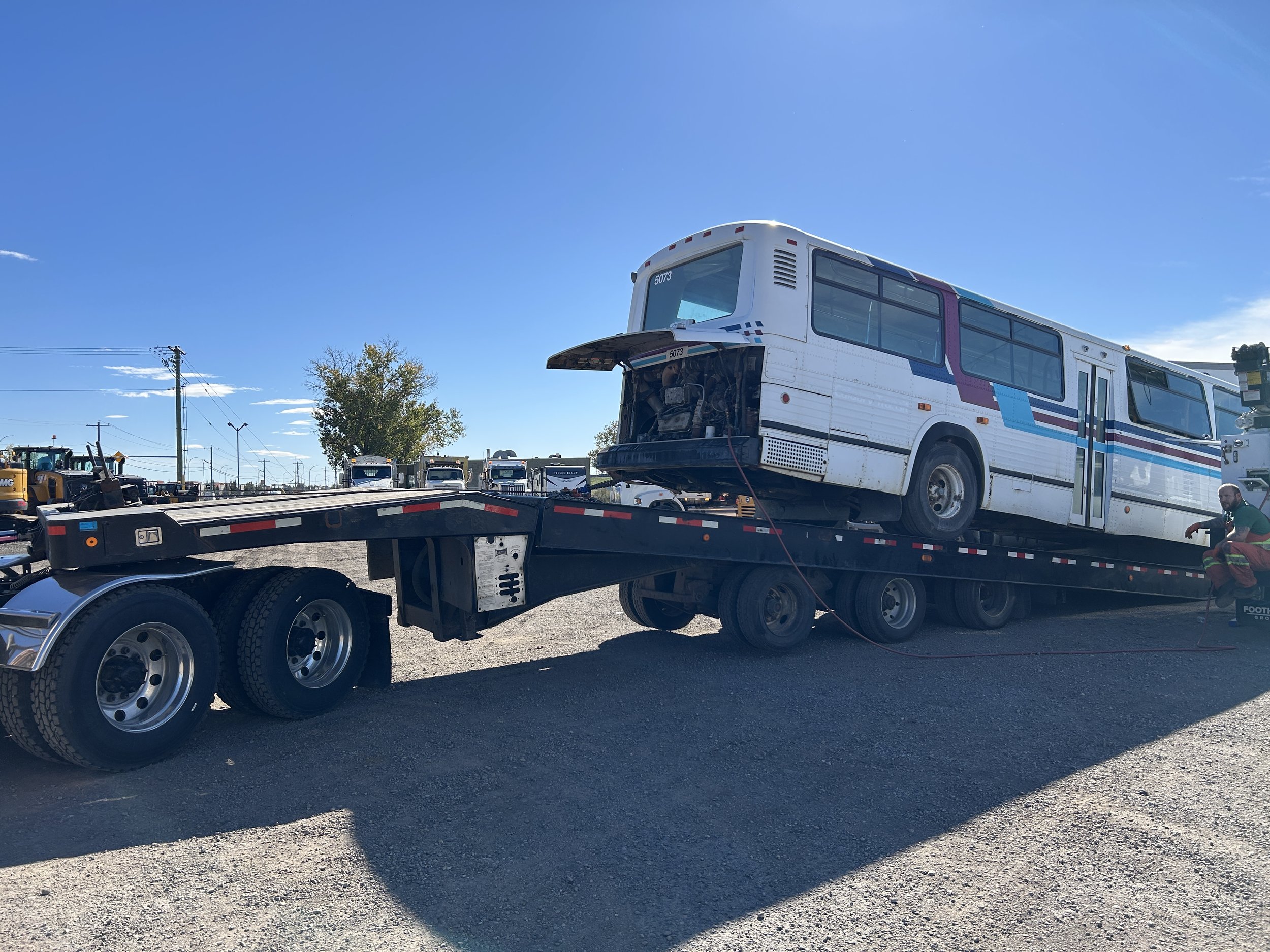
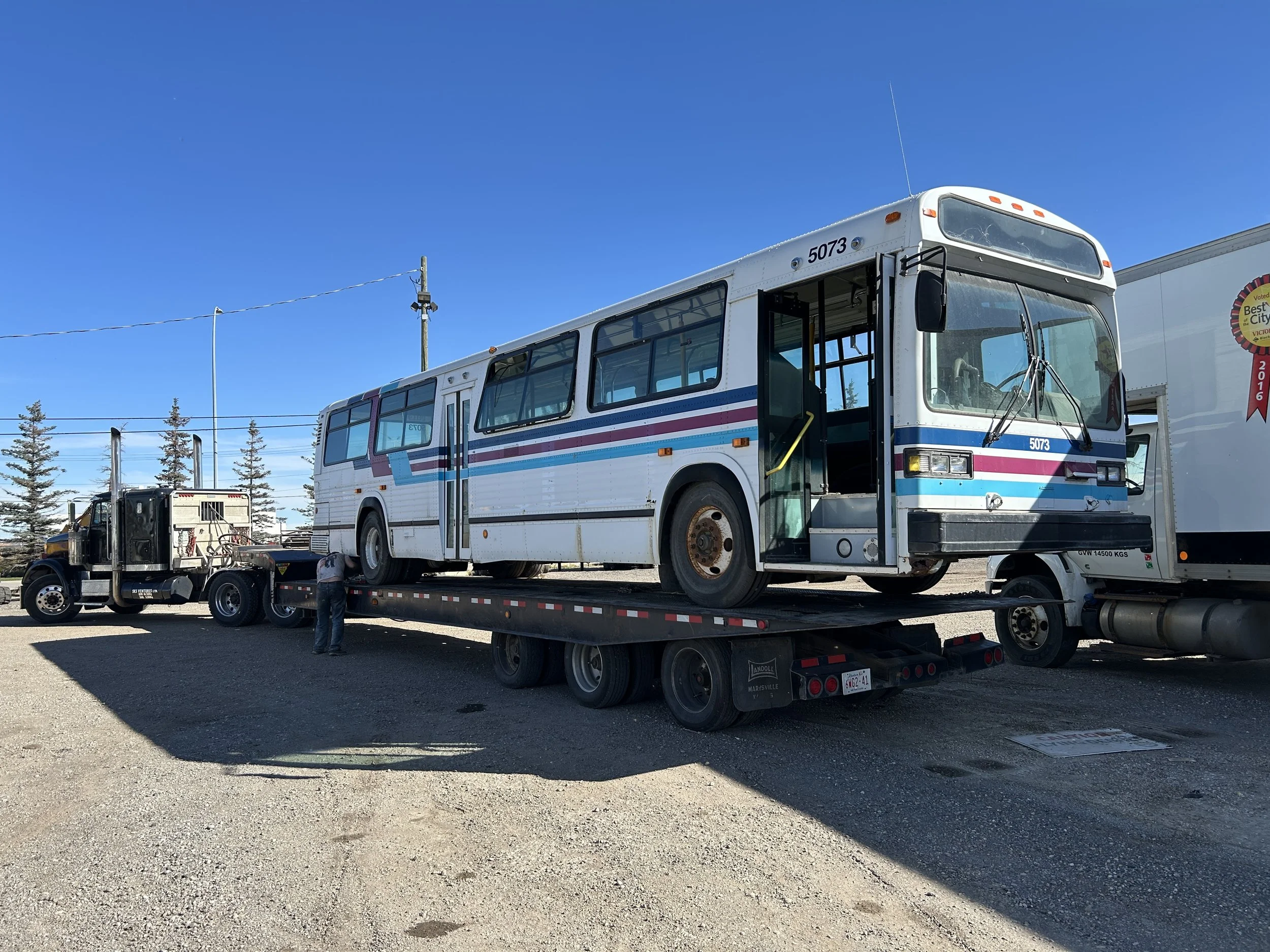
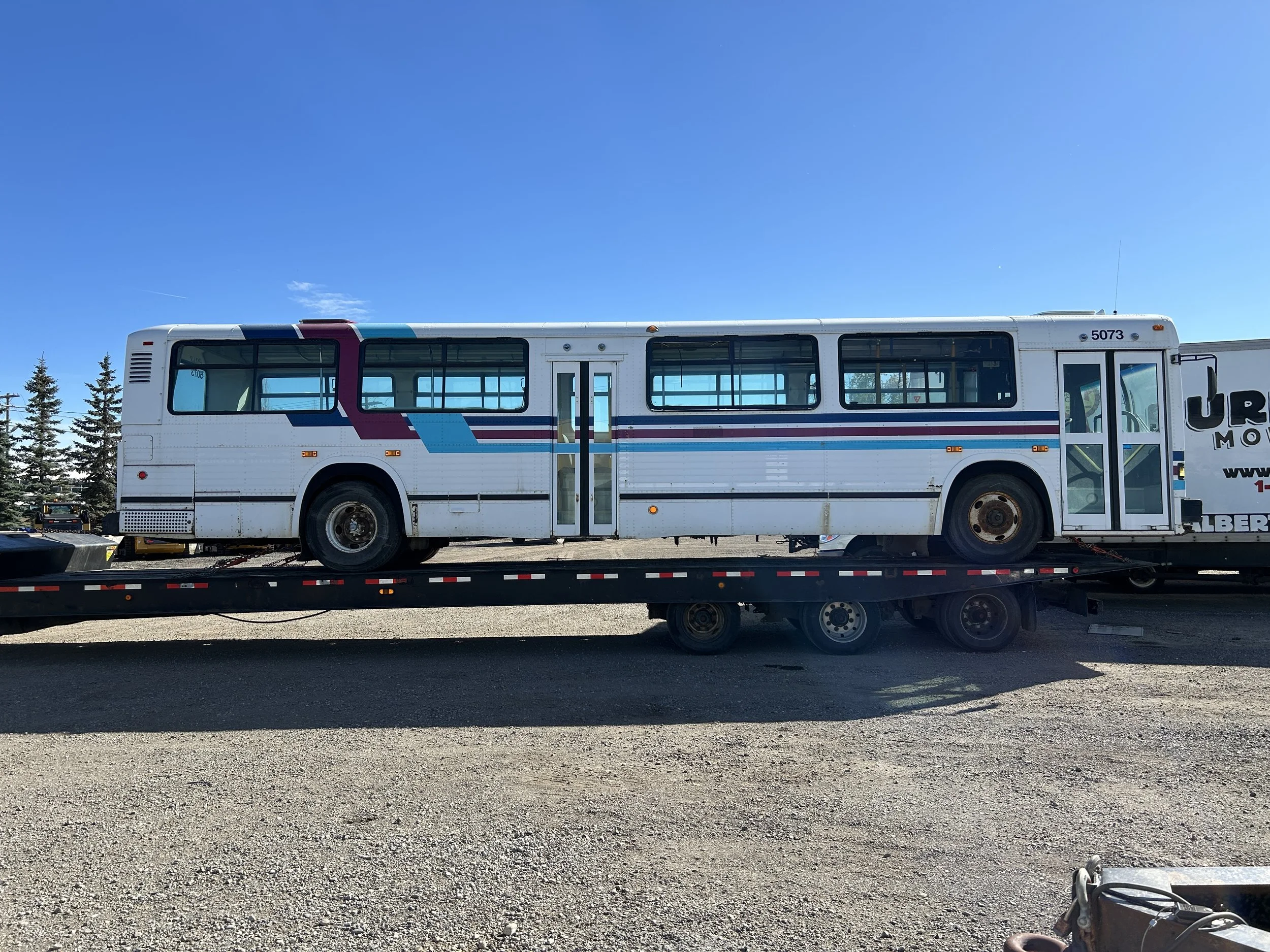
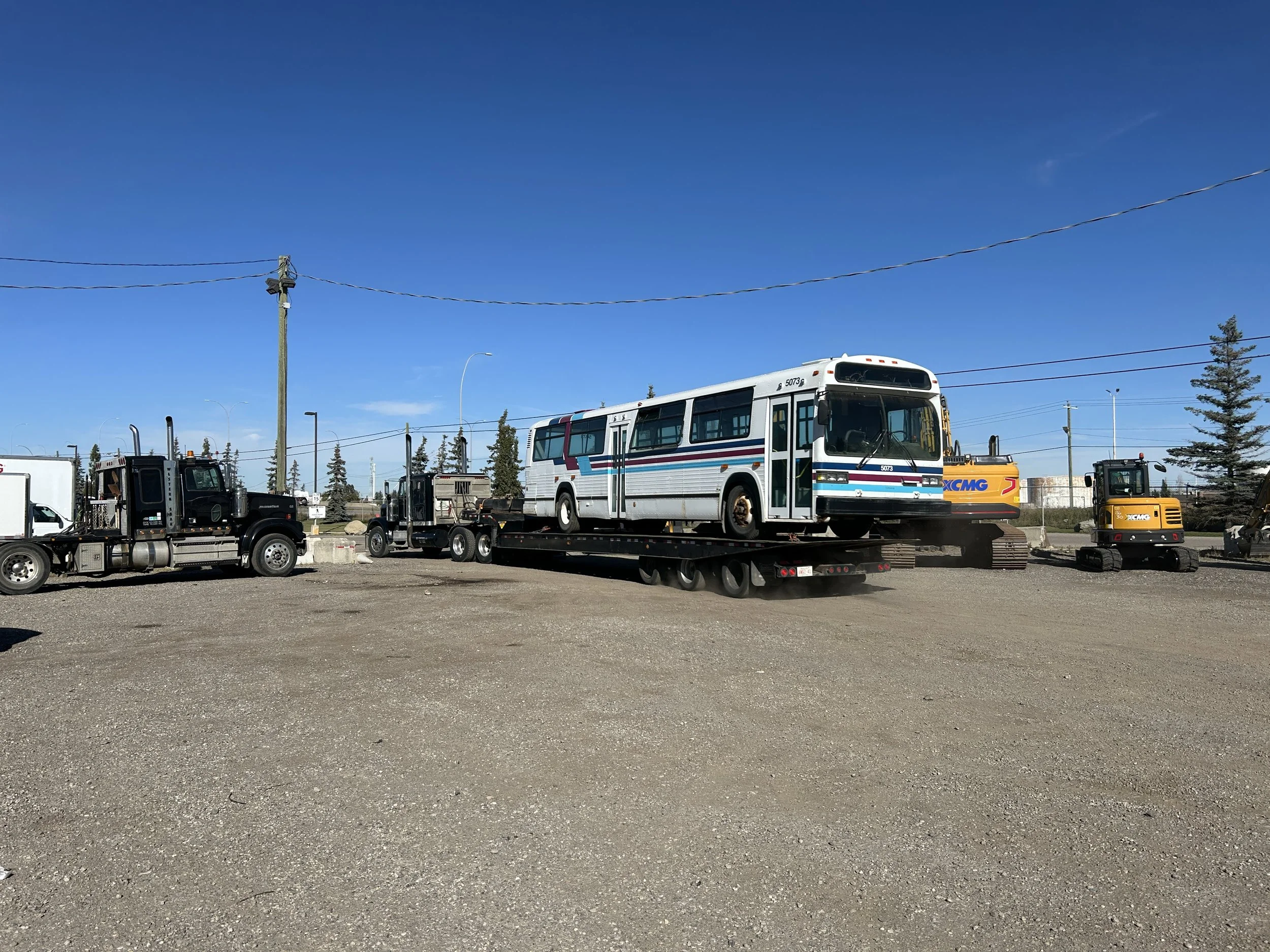
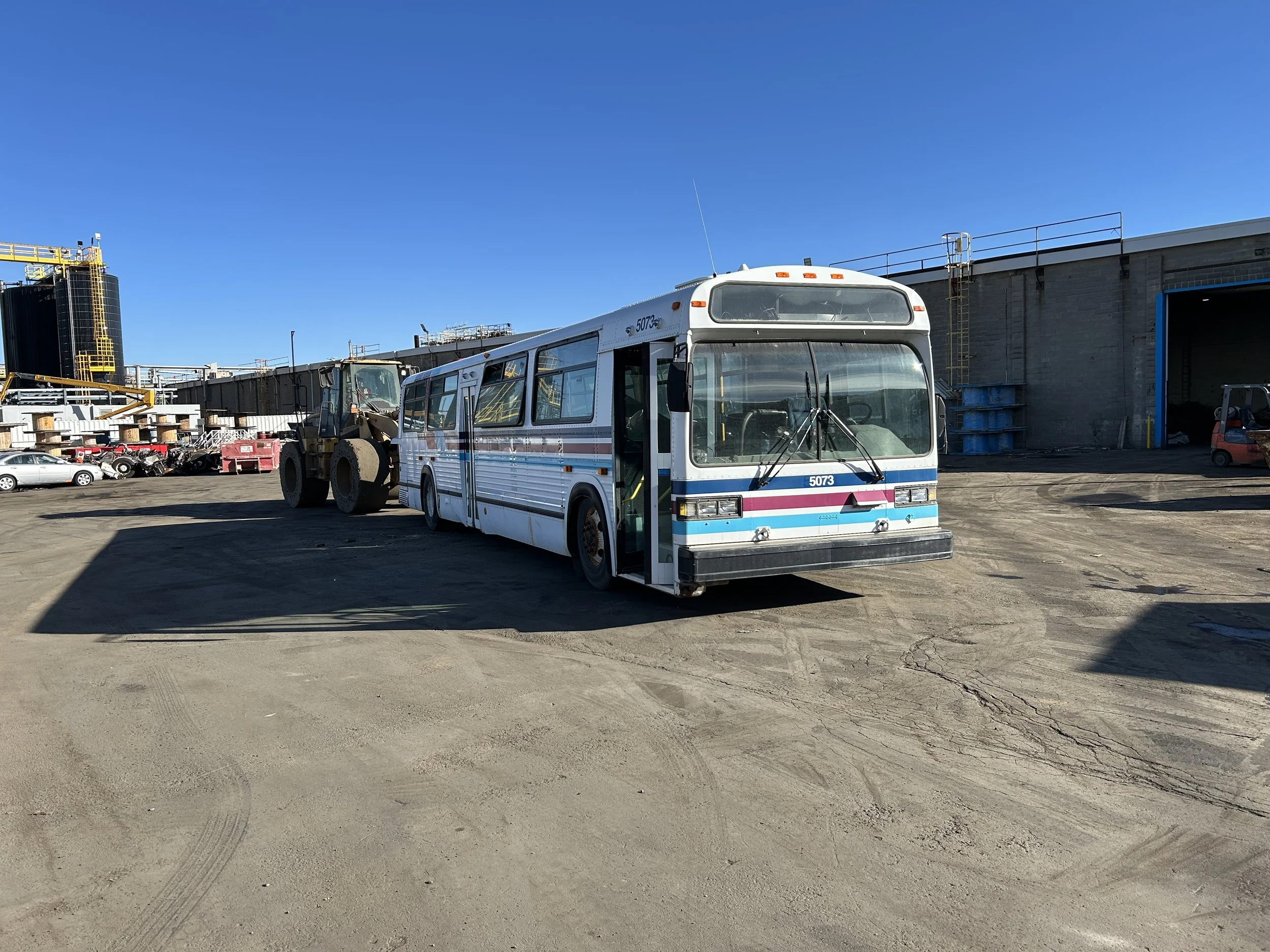
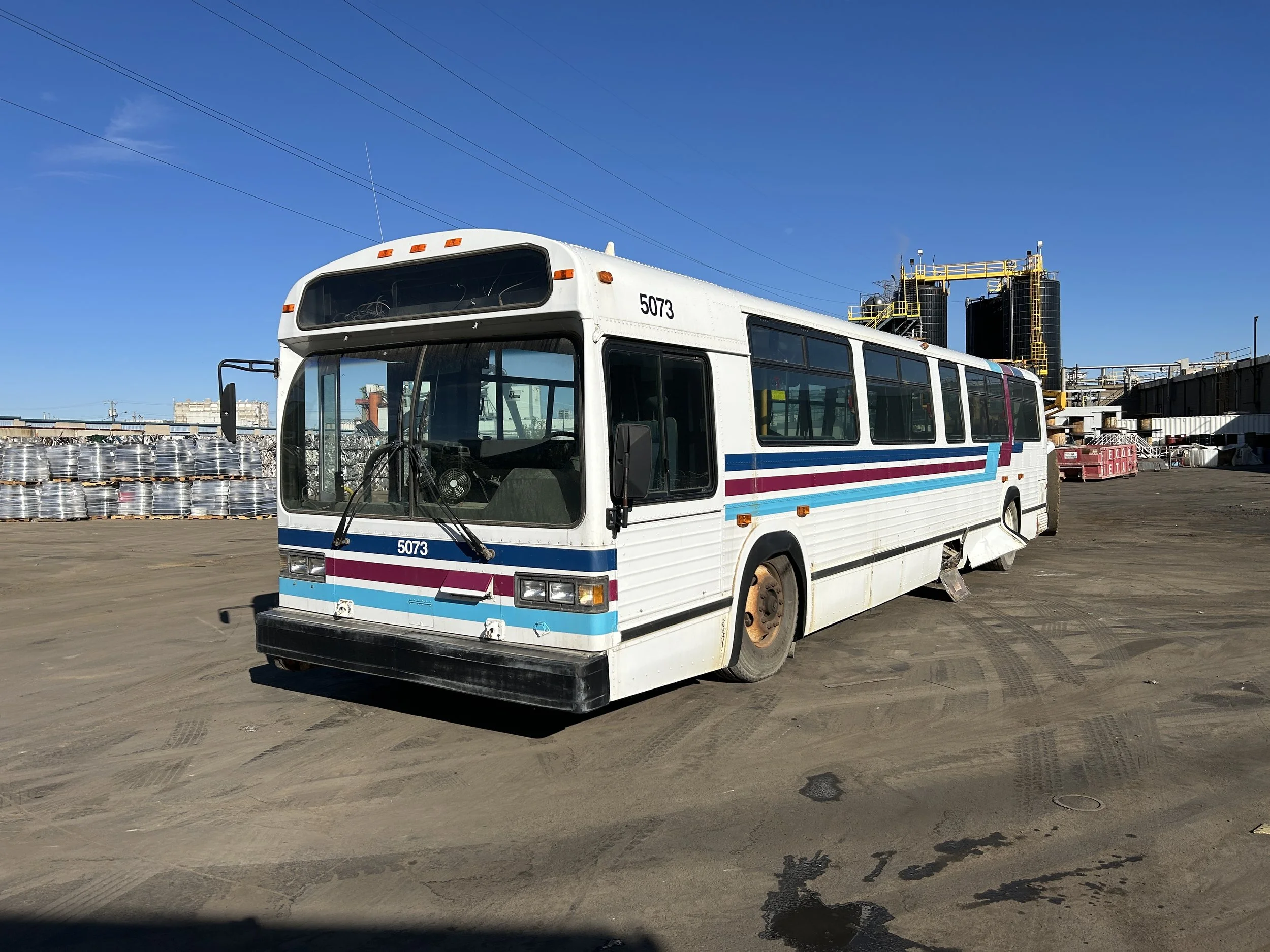
5073 departing Foothills Group for the last time, and later photographed at Recon Metal awaiting its fate